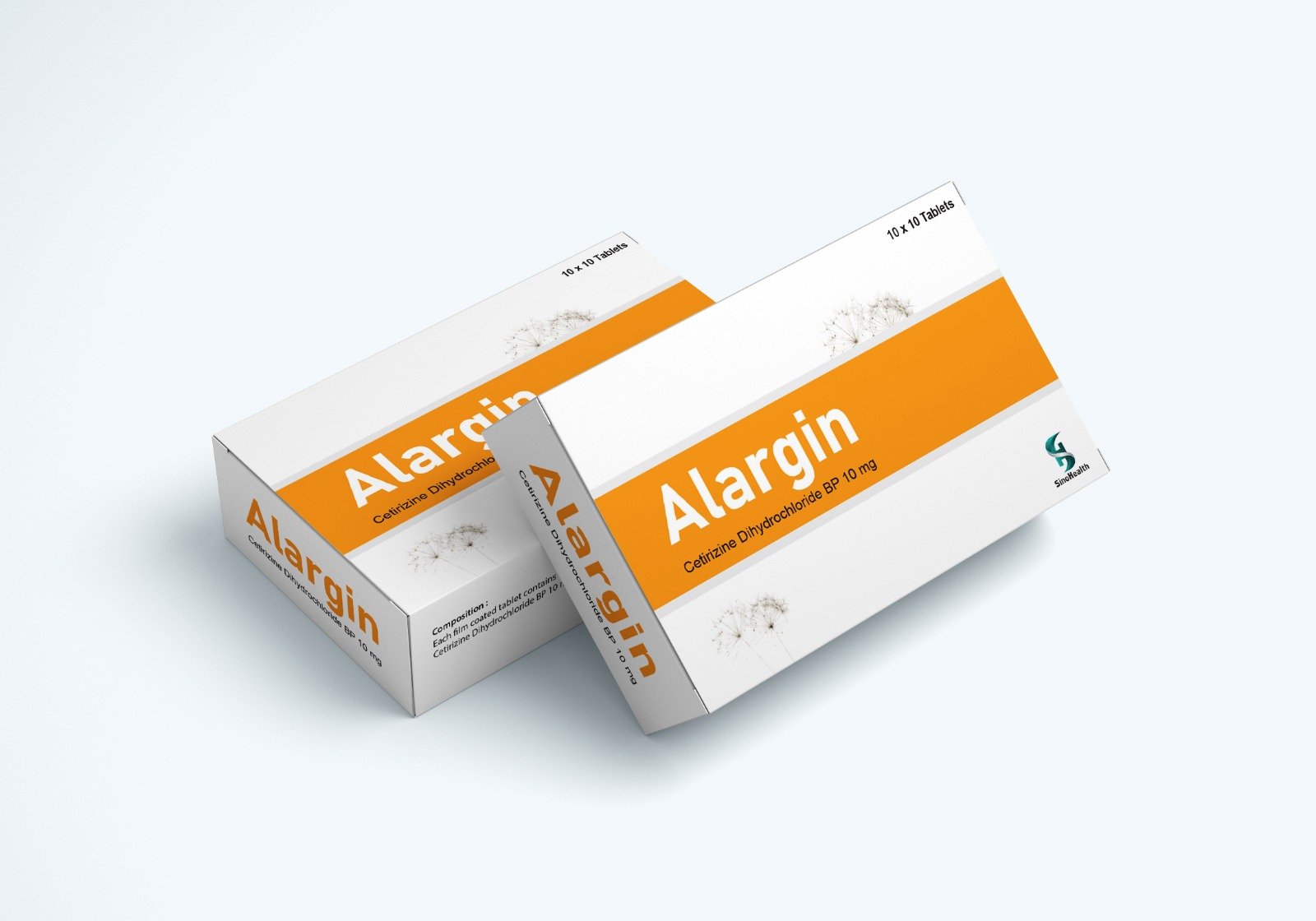
Alargin
Description
💊 Alargin – Cetirizine Dihydrochloride
Manufacturer: SinoHealth Pharmaceuticals LTD
1. Presentation:
-
Oral Dosage Form: Tablets and oral syrup
-
Injectable Dosage Form: Single-use intravenous injection
-
Strength: 10 mg per tablet / per 5 ml syrup / as specified for injection
2. Description:
Alargin contains Cetirizine Hydrochloride, a potent H1 receptor antagonist with minimal anticholinergic and antiserotonergic effects.
At therapeutic doses, Cetirizine is non-sedating in most patients and does not cause behavioral changes.
It inhibits the histamine-mediated early phase of allergic reactions and reduces the migration of inflammatory cells and the release of mediators associated with the late phase of allergic reactions.
Pharmacokinetics:
-
Oral Cetirizine 10 mg achieves peak plasma concentration (257 mcg/L) within 1 hour (980 mcg/L in children).
-
Food does not affect the extent of absorption but may slightly reduce the rate.
-
Peak blood levels (~0.3 μg/mL) occur 30–60 minutes after a 10 mg dose.
-
Plasma half-life is approximately 11 hours; renal clearance ~30 mL/min.
-
Excretion half-life ~9 hours; absorption is consistent among subjects.
3. Indications:
Alargin is indicated for the relief of symptoms associated with:
-
Seasonal and perennial allergic rhinitis
-
Chronic idiopathic urticaria (uncomplicated skin manifestations)
-
Allergen-induced asthma
Use only under the supervision of a registered physician.
4. Dosage & Administration:
Oral Dosage Form:
-
Adults and children ≥6 years: 1 tablet or 2 teaspoonfuls once daily, or 1 teaspoonful twice daily
-
Children 2–6 years: 1 teaspoonful once daily, or ½ teaspoonful twice daily
-
Children 6 months–2 years: ½ teaspoonful once daily (may increase to ½ teaspoonful every 12 hours for children 12–23 months)
Injectable Dosage Form:
-
Adults & adolescents ≥12 years: 10 mg IV once daily
-
Children 6–11 years: 5–10 mg IV depending on symptom severity
-
Children 6 months–5 years: 2.5 mg IV once daily
Administer IV over 1–2 minutes. Not recommended in pediatric patients <6 years with renal or hepatic impairment.
Use only under registered physician guidance.
5. Interaction:
No clinically significant drug interactions have been found with:
-
Theophylline
-
Azithromycin
-
Pseudoephedrine
-
Ketoconazole
-
Erythromycin
-
Other commonly used drugs
6. Contraindications:
-
Hypersensitivity to Cetirizine or Hydroxyzine
-
Avoid in patients using ergot derivatives simultaneously
-
Patients with severe liver disorders
7. Side Effects:
-
Most common: somnolence
-
Other rare effects: headache, mild gastrointestinal discomfort, dry mouth
-
Generally well-tolerated; reversible upon discontinuation
8. Pregnancy & Lactation:
-
Pregnancy: FDA Category B; use only if clearly needed
-
Lactation: Excreted in human milk; exercise caution when administered to nursing mothers
9. Precautions & Warnings:
Related products