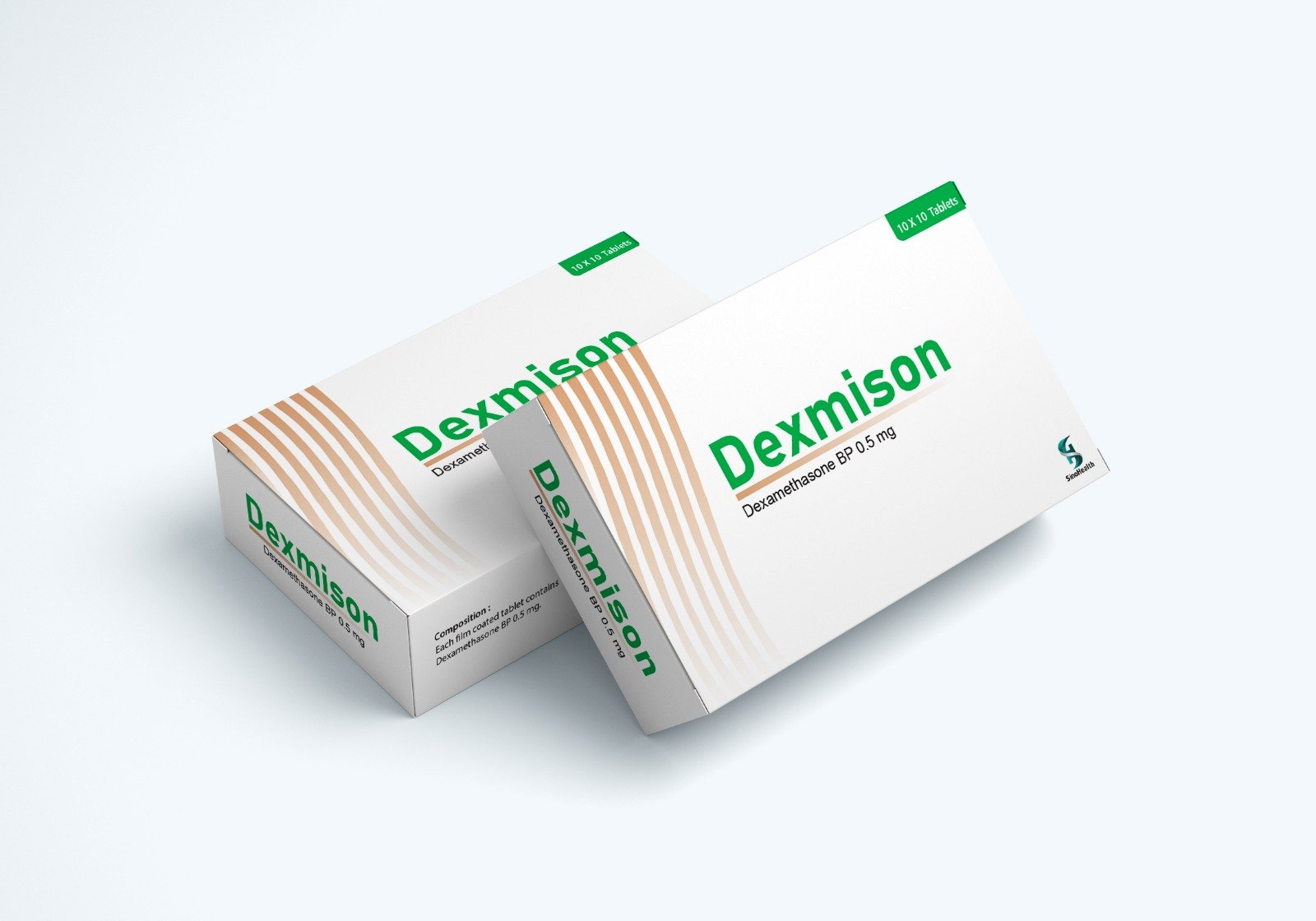
Dexmison
Description
💊 Dexmison – Dexamethasone
Manufacturer: SinoHealth Pharmaceuticals LTD
1. Presentation:
-
Oral: Tablets of specified strengths (as marketed)
-
Injection: Solution for IV/IM use (ampoules/vials)
-
Other forms: As per product line (e.g., oral drops, depot injections)
2. Description / Pharmacology:
Dexmison contains Dexamethasone, a synthetic glucocorticoid with potent anti-inflammatory and immunosuppressive properties. Dexamethasone decreases inflammation by inhibiting leukocyte migration and reversing increased capillary permeability; it also suppresses normal immune responses.
Pharmacodynamic effects include reduction of inflammatory mediators, suppression of cellular immune responses, and modulation of carbohydrate, protein and fat metabolism. It is extensively distributed after systemic administration and metabolized in the liver.
3. Indications:
Dexmison is indicated in a variety of conditions where potent anti-inflammatory or immunosuppressive therapy is required, including but not limited to:
Allergic states: Severe or incapacitating allergic conditions unresponsive to conventional therapy (asthma exacerbations, atopic dermatitis, contact dermatitis, severe drug reactions, perennial/seasonal allergic rhinitis, serum sickness).
Collagen & Rheumatic diseases: Systemic lupus erythematosus, rheumatoid arthritis, ankylosing spondylitis, psoriatic arthritis, dermatomyositis, polymyositis; adjunctive short-term therapy in acute rheumatic carditis and acute gouty arthritis.
Dermatologic: Bullous dermatoses, exfoliative dermatitis, pemphigus, severe erythema multiforme (Stevens–Johnson syndrome).
Endocrine: Primary/secondary adrenocortical insufficiency (replacement therapy as appropriate), congenital adrenal hyperplasia, hypercalcemia of malignancy, nonsuppurative thyroiditis (as indicated).
Gastrointestinal: Regional enteritis (Crohn’s disease), ulcerative colitis (as adjunctive therapy).
Hematologic: Selected autoimmune or hypoplastic anemias, idiopathic thrombocytopenic purpura (adults).
Neoplastic: As adjunctive therapy in certain leukemias and lymphomas, to manage treatment-related symptoms.
Neurologic: Acute exacerbations of multiple sclerosis, cerebral edema associated with brain tumors, head injury or craniotomy.
Ophthalmic: Temporal arteritis, uveitis and inflammatory ocular conditions unresponsive to topical therapy.
Renal: To induce diuresis or remission of proteinuria in idiopathic or lupus nephrotic syndrome.
Respiratory: Certain severe pulmonary disorders (e.g., symptomatic sarcoidosis, selected cases of pulmonary tuberculosis with severe dissemination when used with antituberculous therapy).
Miscellaneous: Diagnostic dexamethasone suppression testing, trichinosis with neurologic/myocardial involvement, tuberculous meningitis with impending subarachnoid block (when combined with appropriate antituberculous therapy).
Use only under the direction of a registered physician.
4. Dosage & Administration:
Dosage must be individualized according to the severity of the disease and the patient’s response. Use the lowest effective dose for the shortest duration consistent with clinical goals. If no improvement occurs within a few days, reassess therapy.
Oral (tablets):
-
Adults: typical daily oral dosages range 1–10 mg (sometimes higher temporarily for severe disease).
-
Children: 0.03–0.20 mg/kg/day depending on condition and response.
Intravenous / Intramuscular / Local injection:
-
Emergency (e.g., anaphylaxis, acute severe asthma, cerebral edema): initial 10–20 mg IV, followed by 6 mg IV/IM every 6 hours until stable; then taper.
-
For systemic therapy in adults: 0.05–0.20 mg/kg/day commonly used.
-
Local injections (intra-articular, intrabursal, tendon sheath): doses vary by joint size (e.g., 2–4 mg large joint; 0.8–1 mg small joint); frequency individualized (every 3–5 days to 2–3 weeks as required).
Dexamethasone suppression test:
-
Short test: 1 mg at 11 pm; measure plasma cortisol next morning. Longer protocols use graded dosing as clinically indicated.
Important: When long-term therapy is required, reduce dose gradually to avoid acute adrenal insufficiency.
5. Interactions:
-
Diuretics / Cardiac glycosides: Risk of hypokalemia increases; monitor potassium and cardiac status.
-
Antidiabetics: Glucocorticoids may raise blood glucose; insulin/oral hypoglycemic requirements may increase.
-
NSAIDs / Anticoagulants: Concomitant NSAIDs increase GI ulceration risk; glucocorticoids may alter warfarin effect—monitor INR.
-
Enzyme inducers (rifampicin, phenytoin, barbiturates, carbamazepine, primidone): May reduce glucocorticoid effectiveness.
-
Salicylates: Caution—monitor for salicylate toxicity if doses changed.
-
Antacids (Mg-trisilicate): May impair GI absorption of glucocorticoids—space dosing.
Always review concurrent medications for potential interactions.
6. Contraindications:
-
Systemic fungal infections (unless appropriate antifungal therapy).
-
Known hypersensitivity to dexamethasone or other corticosteroids.
-
Active or latent untreated infections (use only with appropriate anti-infective therapy when indicated).
-
Peptic ulcer disease (relative contraindication—use with caution).
-
Certain viral infections (e.g., varicella) and ocular viral infections.
-
Uncontrolled glaucoma (relative).
7. Side Effects:
Adverse effects are generally related to dose and duration. Prolonged systemic therapy may cause:
Endocrine/metabolic: Cushingoid features, hirsutism, menstrual irregularities, growth suppression in children, decreased glucose tolerance, negative nitrogen and calcium balance.
Fluid/electrolyte: Sodium/fluid retention, hypertension, hypokalemia.
Musculoskeletal: Myopathy, osteoporosis, aseptic necrosis of femoral/humeral heads.
Gastrointestinal: Peptic ulceration, perforation, GI hemorrhage.
Dermatologic: Impaired wound healing, skin atrophy, striae, bruising, acne.
CNS/Psychiatric: Mood changes, insomnia, euphoria, severe depression, psychosis, convulsions (rare).
Ophthalmic: Increased intraocular pressure, glaucoma, posterior subcapsular cataracts.
Immunosuppression: Increased susceptibility to infections, masked infection signs, reduced vaccine response.
If serious or unusual adverse events occur, discontinue and seek medical advice.
8. Pregnancy & Lactation:
-
Pregnancy: Category C. Use during pregnancy only if benefits justify potential fetal risk. Monitor maternal and fetal status.
-
Lactation: Dexamethasone is excreted in human milk; mothers on high doses should avoid breastfeeding or seek medical advice.
9. Precautions & Warnings:
-
Use the lowest effective dose and taper gradually after prolonged therapy to avoid adrenal insufficiency.
-
Caution in patients with congestive heart failure, hypertension, diabetes, peptic ulcer disease, osteoporosis, infections, glaucoma, and psychiatric disorders.
-
Monitor blood glucose, electrolytes (particularly potassium), blood pressure, bone density (with long-term use), and signs of infection.
-
Avoid live vaccines in immunosuppressed patients.
-
In patients receiving long-term therapy, periodic ophthalmologic examinations recommended.
10. Use in Special Populations:
-
Pediatric: Minimize dose/duration to reduce growth suppression; titrate to lowest effective dose.
-
Geriatric: May be more susceptible to adverse effects (osteoporosis, diabetes, hypertension); monitor accordingly.
-
Renal impairment: No specific dose adjustment required, but monitor fluid/electrolyte balance.
-
Hepatic impairment: Use caution; metabolism may be altered—adjust dose per clinical response.
11. Overdose Effects & Management:
-
Acute overdose is unlikely to be life-threatening. Symptoms may include Cushingoid features and electrolyte disturbances.
-
Management is supportive and symptomatic; there is no specific antidote. Monitor vitals and electrolytes; treat complications.
12. Storage Conditions:
-
Tablets: Store in a cool, dry place protected from light and moisture.
-
Injectable vials/ampoules: Store as per label instructions; protect from extreme temperatures.
-
Keep all medicines out of reach of children.
13. Therapeutic Class:
Systemic Glucocorticoid (Corticosteroid)
Related products