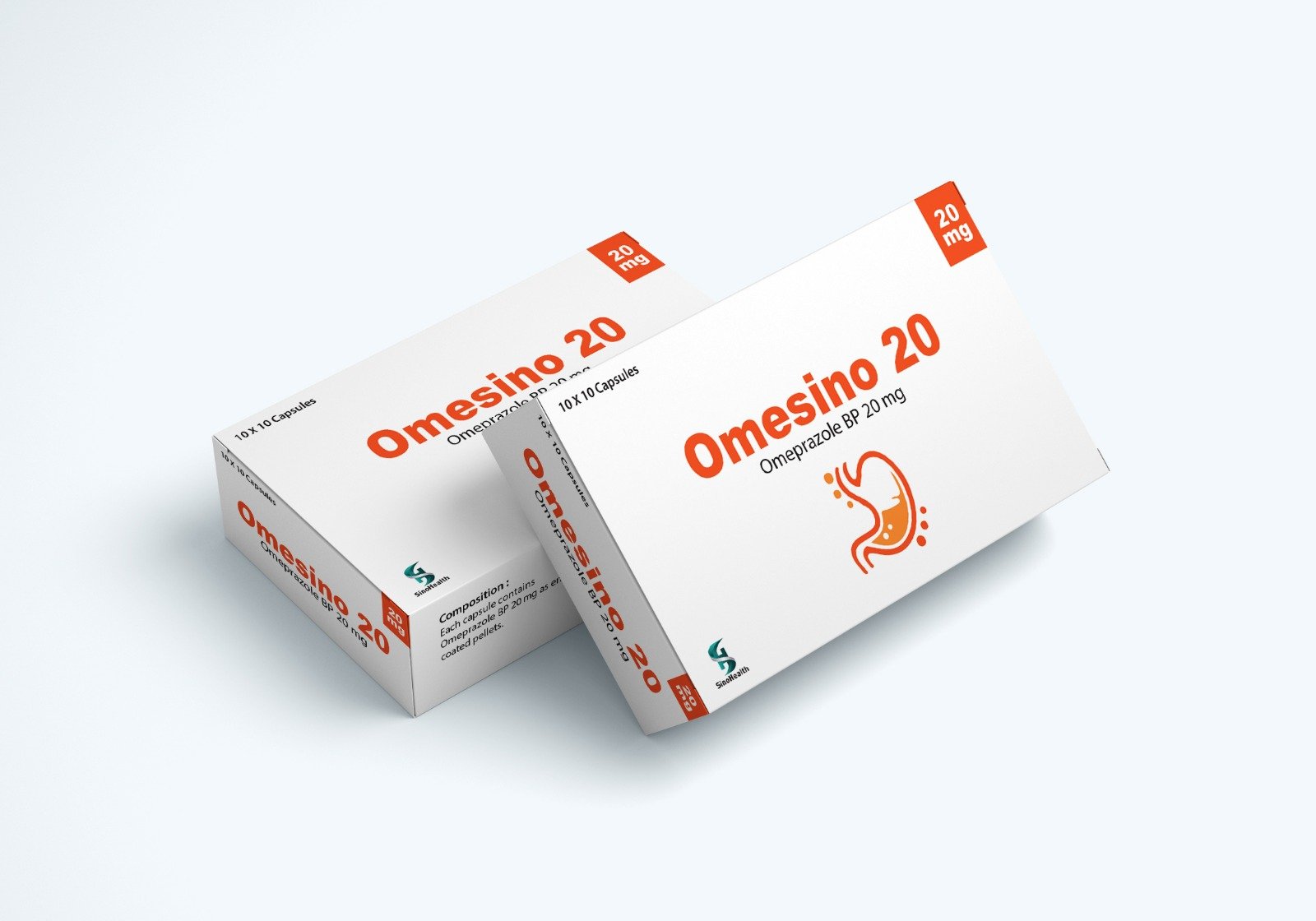
Omepesino 20
Description
💊 Omesino 20 – Omeprazole
Manufacturer: SinoHealth Pharmaceuticals LTD
1. Presentation:
Tablet: 10 mg / 20 mg / 40 mg (as marketed)
Capsule: 10 mg / 20 mg / 40 mg delayed-release formulation
IV Injection: 40 mg vial (for reconstitution)
2. Description / Pharmacology:
Omeprazole is a proton pump inhibitor (PPI) that suppresses gastric acid secretion by blocking the H⁺/K⁺-ATPase enzyme system in the gastric parietal cells — the final step in acid production.
It is a substituted benzimidazole derivative that effectively reduces both basal and stimulated gastric acid secretion, regardless of the stimulus.
Pharmacological actions:
-
Inhibits gastric acid secretion at the final step of acid production
-
Promotes healing of gastric and duodenal ulcers
-
Provides symptom relief in acid reflux and dyspepsia
-
Prevents recurrence of peptic ulcers
-
Reduces risk of acid aspiration during anesthesia
3. Indications:
Omepesino 20 is indicated in —
-
Gastric and duodenal ulcers
-
NSAID-associated ulcers (treatment and prophylaxis)
-
Gastroesophageal reflux disease (GERD)
-
Long-term management of acid reflux disease
-
Acid-related dyspepsia
-
Severe ulcerating reflux esophagitis
-
Zollinger–Ellison syndrome
-
Helicobacter pylori–induced peptic ulcer (in combination with antibiotics)
-
Prophylaxis of acid aspiration during general anesthesia
⚠️ রেজিস্টার্ড চিকিৎসকের পরামর্শ মোতাবেক ঔষধ সেবন করুন।
4. Dosage & Administration:
Oral administration:
-
Benign gastric and duodenal ulcer: 20 mg once daily for 4 weeks (duodenal) or 8 weeks (gastric). May increase to 40 mg daily in severe cases.
-
NSAID-associated ulcer: 20 mg once daily for 4–8 weeks; for prophylaxis, 20 mg daily.
-
GERD / Reflux esophagitis: 20 mg once daily for 4–8 weeks. Maintenance dose: 20 mg once daily.
-
Acid-related dyspepsia: 10–20 mg once daily for 2–4 weeks.
-
Prophylaxis of acid aspiration: 40 mg the night before and 40 mg 2–6 hours before surgery.
-
Zollinger–Ellison Syndrome: Initially 60 mg once daily; adjust individually (may require 20–120 mg daily).
-
H. pylori eradication:
-
Omeprazole 20 mg twice daily
-
Amoxicillin 1000 mg twice daily
-
Clarithromycin 500 mg twice daily for 7–10 days
-
IV administration:
-
40 mg IV once daily (for patients unable to take orally).
-
For acid aspiration prophylaxis: 40 mg slow IV injection over 5 minutes, 1 hour before surgery.
💡 Tablets or capsules should be swallowed whole, one hour before a meal.
⚠️ রেজিস্টার্ড চিকিৎসকের পরামর্শ মোতাবেক ঔষধ সেবন করুন।
5. Drug Interactions:
-
CYP2C19 substrates (e.g., diazepam, phenytoin, warfarin): elimination may be delayed.
-
Drugs requiring acidic pH (e.g., ketoconazole, iron salts, digoxin): absorption may decrease.
-
Clarithromycin + Omeprazole: increases plasma concentration (useful in H. pylori eradication).
-
Clopidogrel: concurrent use may reduce its antiplatelet activity.
-
No interaction with food, alcohol, or most NSAIDs.
6. Contraindications:
-
Known hypersensitivity to omeprazole or substituted benzimidazoles.
-
Suspected gastric malignancy must be excluded before treatment.
7. Side Effects:
Generally well tolerated.
Common:
-
Headache
-
Nausea, vomiting
-
Abdominal pain, flatulence
-
Diarrhea or constipation
-
Dizziness
Rare:
-
Skin rash, urticaria
-
Photosensitivity
-
Hepatitis (reversible)
-
Hypomagnesemia (with long-term use)
-
Bone fracture (prolonged high-dose use)
8. Pregnancy & Lactation:
-
Pregnancy: Studies show no adverse effects; can be used if clearly indicated.
-
Lactation: Unknown if excreted in breast milk — use caution.
Use only when potential benefits justify the risks.
9. Precautions & Warnings:
-
Rule out gastric cancer before starting therapy.
-
Use caution in patients with hepatic impairment.
-
Avoid long-term therapy unless necessary.
-
May slightly increase risk of osteoporosis-related fracture.
-
Discontinue gradually to prevent rebound acid hypersecretion.
10. Use in Special Populations:
-
Children: Limited data below 1 year.
-
Elderly: No dose adjustment needed.
-
Hepatic impairment: Reduce dose to 10–20 mg/day.
-
Renal impairment: No adjustment necessary.
11. Overdose Effects:
Symptoms: Drowsiness, confusion, tachycardia.
Treatment: Symptomatic and supportive. No specific antidote; omeprazole is not dialyzable.
12. Therapeutic Class:
Proton Pump Inhibitors (PPIs) / Antiulcer Agents
13. Storage Conditions:
Store below 30°C, in a dry place, protected from light and moisture.
Keep out of reach of children.
Related products