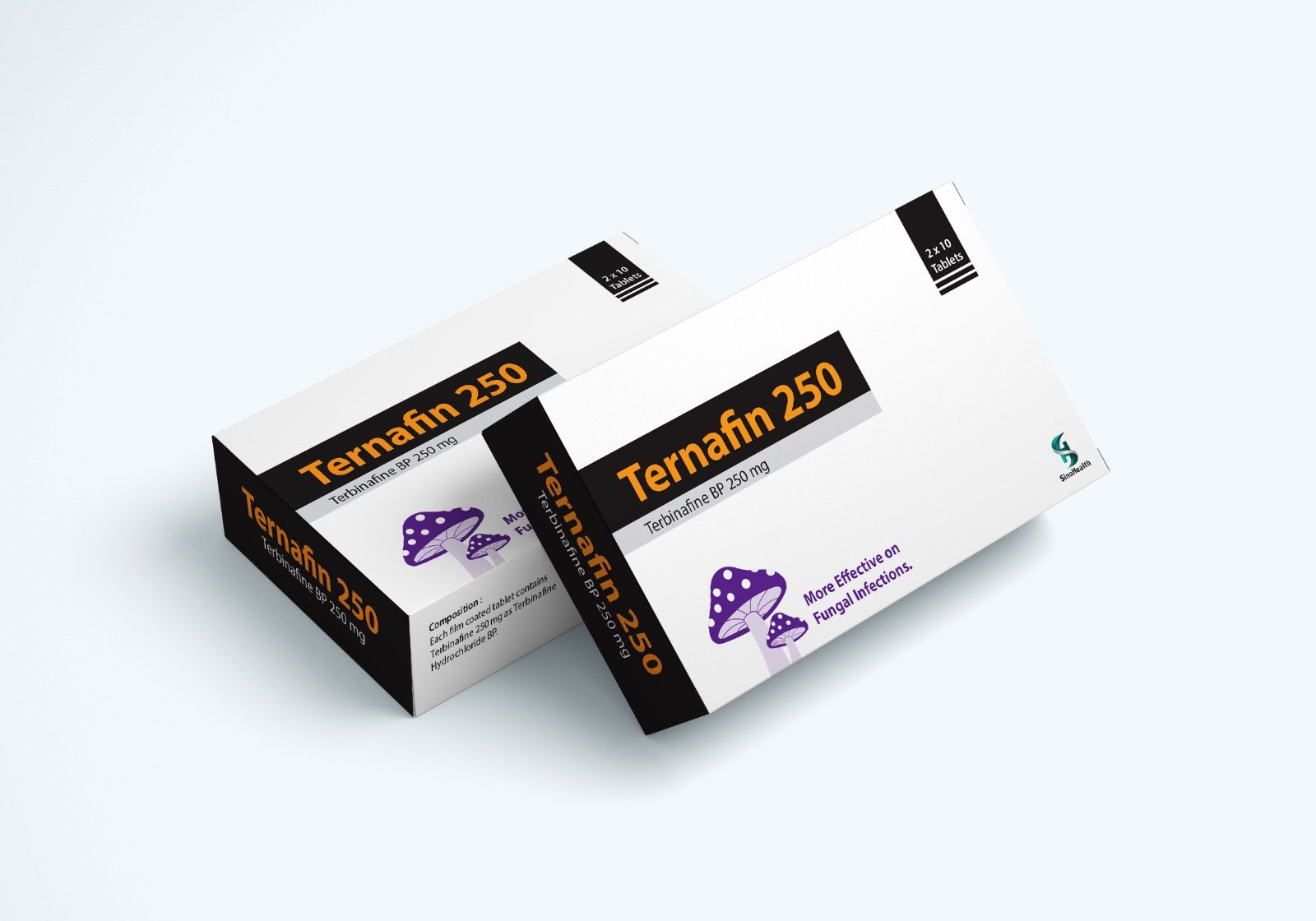
Ternafin 250
Description
💊 Ternafin 250 – Terbinafine 250 mg Tablet
Manufacturer: SinoHealth Pharmaceuticals LTD
1. Indications:
Ternafin 250 is indicated for:
Tablets:
-
Onychomycosis of toenails or fingernails caused by dermatophytes (Tinea Unguium)
Granules:
-
Tinea Capitis
Cream:
-
Superficial fungal skin infections (Tinea corporis, cruris, pedis, cutaneous candidiasis, pityriasis versicolor)
Spray (1%):
-
Tinea pedis, corporis/cruris, pityriasis versicolor
2. Pharmacology:
Terbinafine is an allylamine antifungal that inhibits Squalene Epoxidase, an enzyme essential for ergosterol synthesis in fungal cell membranes. This results in:
-
Fungal cell death due to accumulation of squalene
-
Increased membrane permeability
Active against most strains of:
-
Trichophyton mentagrophyte
-
Trichophyton rubrum
3. Dosage & Administration:
Tablets (250 mg):
-
Fingernail onychomycosis: 1 tablet once daily for 6 weeks
-
Toenail onychomycosis: 1 tablet once daily for 12 weeks
Clinical improvement may take months after mycological cure
Granules:
-
<25 kg: 125 mg/day up to 6 weeks
-
25–35 kg: 187.5 mg/day up to 6 weeks
-
35 kg: 250 mg/day up to 6 weeks
Cream:
-
Apply once or twice daily to affected areas for:
-
Tinea corporis/cruris: 1–2 weeks
-
Tinea pedis: 1 week
-
Cutaneous candidiasis: 2 weeks
-
Pityriasis versicolor: 2 weeks
-
Spray 1%:
-
Apply once or twice daily depending on the infection for 1 week
-
Tinea pedis: once daily, 1 week
-
Tinea corporis/cruris: once daily, 1 week
-
Pityriasis versicolor: twice daily, 1 week
4. Drug Interactions:
-
CYP2D6 inhibitor: May interact with tricyclic antidepressants, SSRIs, beta-blockers, antiarrhythmics (class 1C), and MAO-B inhibitors.
-
Co-administration requires careful monitoring and possible dose adjustment of 2D6-metabolized drugs.
5. Contraindications:
-
Hypersensitivity to terbinafine or formulation excipients
-
Pre-existing severe liver disease (for tablets)
-
Infants and children for tablet use (safety not established)
6. Side Effects:
Common: Gastrointestinal upset (diarrhea, dyspepsia, abdominal pain), mild rashes, urticaria, pruritus, taste disturbances.
Serious (rare):
-
Idiosyncratic liver injury, liver failure
-
Severe skin reactions (Stevens-Johnson syndrome, toxic epidermal necrolysis)
-
Severe neutropenia, thrombocytopenia, angioedema, anaphylaxis
-
Other: malaise, fatigue, vomiting, arthralgia, myalgia, hair loss
7. Pregnancy & Lactation:
-
Tablets: Avoid during pregnancy; present in breast milk; not recommended during breastfeeding.
-
Cream: No clinical data in pregnant women; use only if benefits outweigh risks; avoid breastfeeding.
8. Precautions & Warnings:
-
Assess pre-existing liver disease before prescribing
-
Monitor ALT and AST prior to starting tablets
-
Discontinue if progressive skin rash or liver injury occurs
-
Cream: External use only, avoid contact with eyes
-
Use cautiously in elderly or patients with hepatic dysfunction
9. Use in Special Populations:
-
Pediatric: Safety not established for tablets
-
Elderly: No dosage adjustment required; monitor liver function if risk factors present
10. Overdose Effects:
-
Clinical data limited; doses up to 5 g (20× daily dose) tolerated
-
Symptoms: nausea, vomiting, abdominal pain, dizziness, rash, headache, frequent urination
-
Supportive treatment recommended
11. Therapeutic Class:
Other Antifungal Preparations / Topical Antifungal Preparations
12. Storage Conditions:
-
Store below 30°C, in a cool and dry place
-
Protect from light
-
Keep out of reach of children
Related products