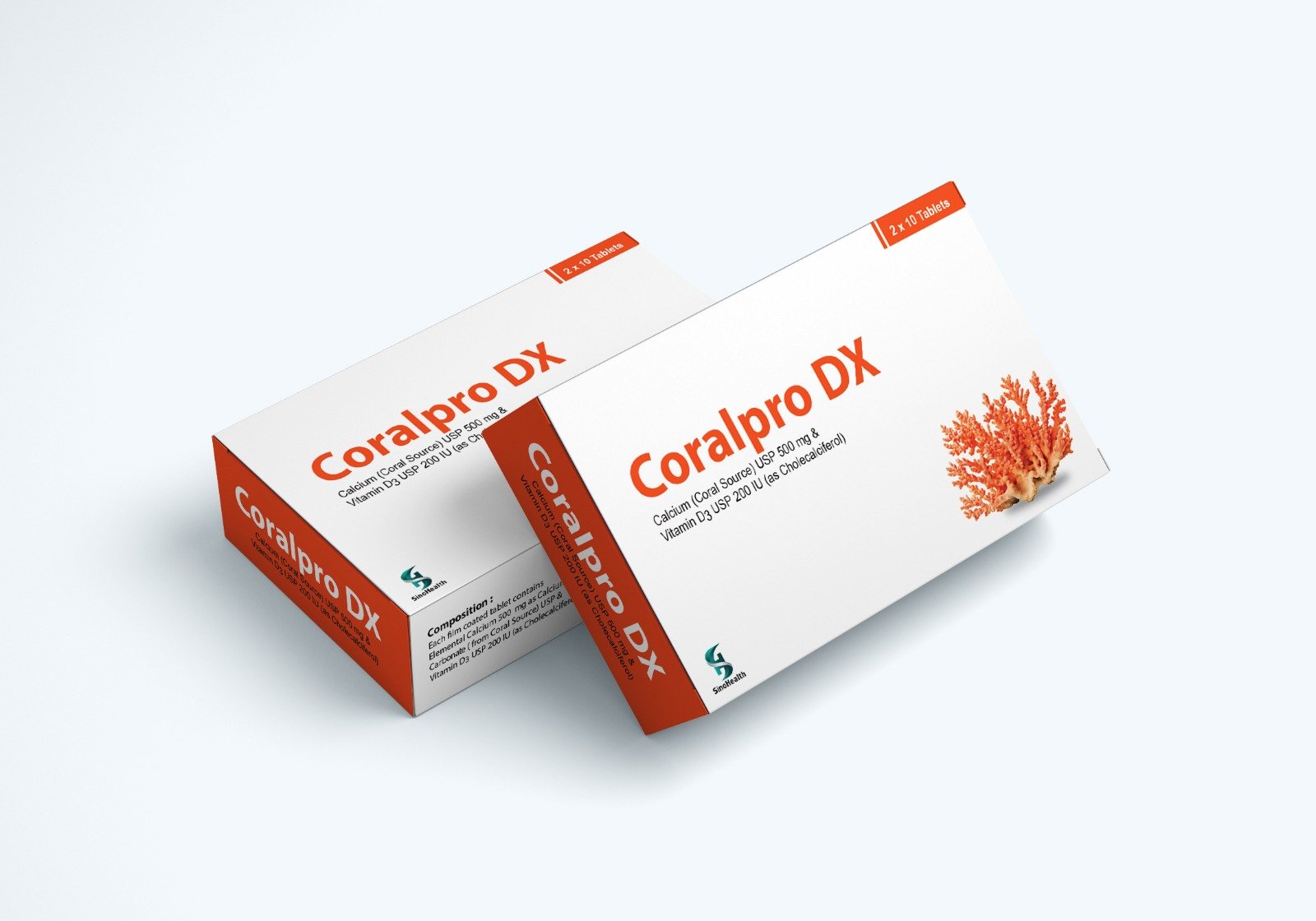
Coralpro DX
Description
💊 Coralpro DX – Calcium + Vitamin D3 Tablet
Manufacturer: SinoHealth Pharmaceuticals LTD
1. Indications:
Coralpro DX is indicated for:
-
Prevention and treatment of calcium and vitamin D3 deficiency
-
Support of bone health and osteoporosis management
-
Supplementation during pregnancy and lactation in case of deficiency
রেজিস্টার্ড চিকিৎসকের পরামর্শ মোতাবেক ঔষধ সেবন করুন।
2. Pharmacology:
-
Calcium is an essential mineral for bone, teeth, muscle, and nerve function.
-
Vitamin D3 (cholecalciferol) enhances calcium absorption in the gastrointestinal tract.
-
Combined therapy ensures adequate serum calcium levels and supports bone mineralization.
3. Interaction:
-
Thiazide diuretics: Reduce urinary calcium excretion; monitor serum calcium.
-
Systemic corticosteroids: Reduce calcium absorption; dose adjustment may be needed.
-
Cholestyramine or paraffin oil: May reduce vitamin D absorption.
-
Tetracyclines: Should be administered 2 hours before or 4–6 hours after calcium intake.
-
Cardiac glycosides: Hypercalcaemia may increase toxicity; monitor ECG and serum calcium.
-
Bisphosphonates / sodium fluoride: Administer Coralpro DX at least 3 hours before these drugs.
-
Foods high in oxalic acid (spinach, rhubarb) and phytic acid (whole cereals): May inhibit calcium absorption; avoid intake within 2 hours of the tablet.
4. Contraindications:
-
Hypercalcemia and hyperparathyroidism
-
Hypercalciuria and nephrolithiasis
-
Hypersensitivity to any component of the preparation
-
Severe renal insufficiency
-
Concomitant digoxin therapy (requires careful serum calcium monitoring)
5. Side Effects:
-
Gastrointestinal irritation and constipation
-
Hypercalcemia (rare, usually in renal failure or high doses)
-
Allergic reactions, irregular heartbeats, nausea, vomiting, decreased appetite, dry mouth, drowsiness
-
Skin rash reported following vitamin D administration
6. Pregnancy & Lactation:
-
Daily intake should not exceed 1500 mg calcium and 600 IU vitamin D3.
-
Avoid overdoses; high doses may affect fetal development.
-
Can be used if calcium or vitamin D deficiency is present.
-
Calcium and vitamin D3 pass into breast milk; consider this during supplementation.
7. Precautions & Warnings:
-
Monitor serum calcium and renal function during long-term use.
-
Special care for elderly, patients on cardiac glycosides or diuretics, or with high tendency for kidney stones.
-
Dose adjustment or discontinuation in case of hypercalcaemia or impaired renal function.
-
Use caution in patients with sarcoidosis or immobilized patients with osteoporosis.
-
Monitor calcium and phosphate levels when prescribing other vitamin D-containing drugs.
8. Overdose Effects:
-
Hypervitaminosis D and hypercalcaemia
-
Symptoms: anorexia, thirst, nausea, vomiting, constipation, abdominal pain, muscle weakness, fatigue, mental disturbances, polyuria, polydipsia, bone pain, nephrocalcinosis, nephrolithiasis, cardiac arrhythmias
-
Severe cases: coma, death, irreversible renal damage, soft tissue calcification
-
Management: Discontinue calcium, thiazide diuretics, lithium, vitamin A, cardiac glycosides; gastric emptying if necessary; rehydration; supportive therapy with loop diuretics, bisphosphonates, calcitonin, corticosteroids; monitor serum electrolytes, renal function, ECG, and CVP
9. Therapeutic Class:
Specific mineral & vitamin combined preparations
10. Storage Conditions:
-
Store below 30°C, protected from light and moisture
-
Keep out of the reach of children
Related products