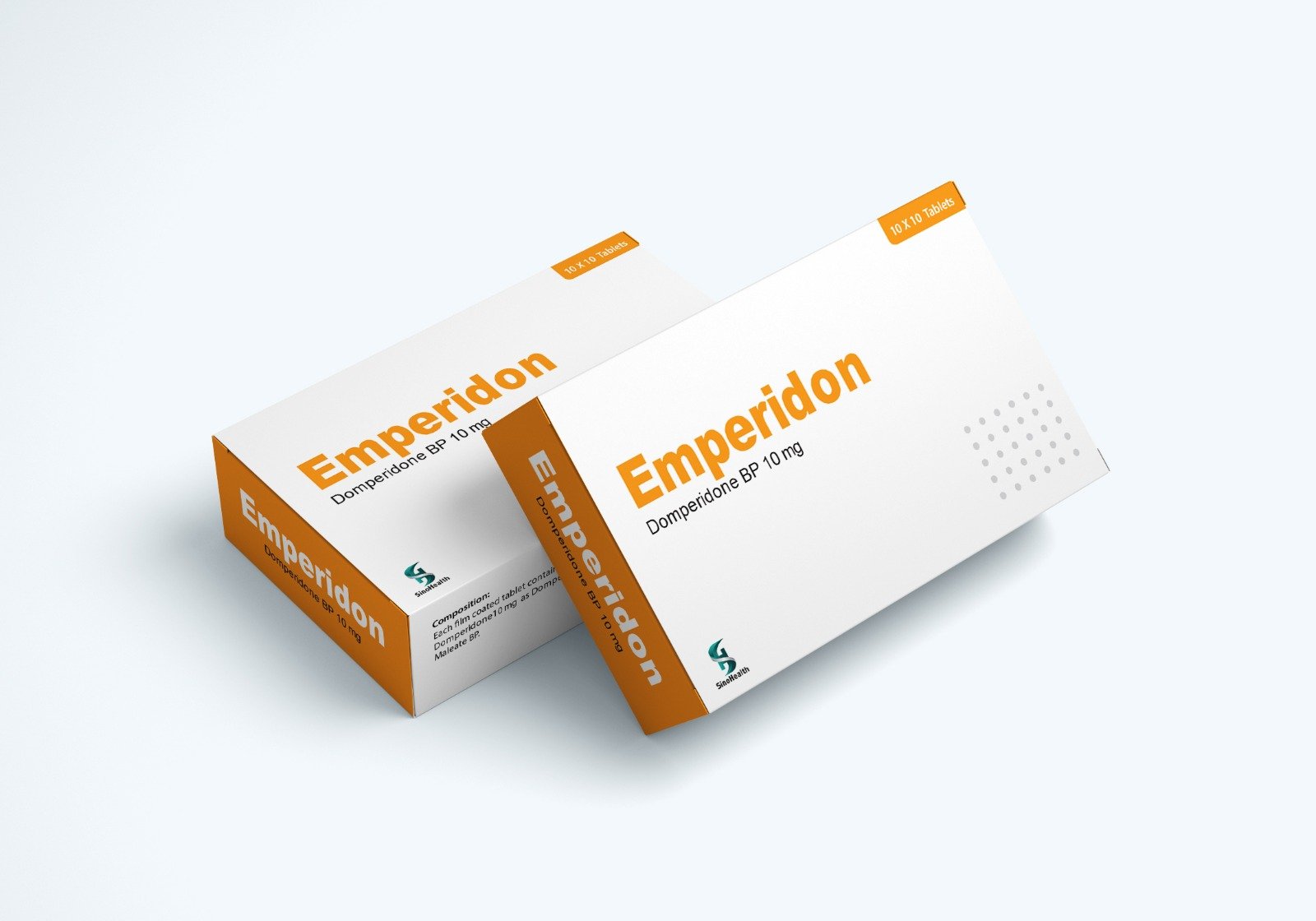
Emperdon
Description
💊 Emperdon – Domperidone
Manufacturer: SinoHealth Pharmaceuticals TD
1. Presentation:
-
Tablet: 10 mg / 20 mg (as marketed)
-
Suspension: 1 mg/ml or 5 mg/5 ml oral liquid
-
Suppository: 30 mg / 60 mg
2. Description / Pharmacology:
Domperidone is a dopamine (D₂) receptor antagonist that acts both on the chemoreceptor trigger zone (CTZ) and the upper gastrointestinal tract.
It enhances gastric motility by blocking dopamine receptors that inhibit gut movement — leading to faster gastric emptying and improved coordination of stomach and intestinal contractions.
Because Domperidone poorly crosses the blood–brain barrier, it rarely causes central nervous system side effects like sedation or extrapyramidal symptoms.
Pharmacological actions:
-
Increases antral and duodenal peristalsis
-
Facilitates gastric emptying
-
Increases lower esophageal sphincter pressure
-
Prevents gastric content regurgitation
Thus, Emperdon relieves nausea, vomiting, and dyspeptic symptoms caused by delayed gastric emptying.
3. Indications:
Emperdon (Domperidone) is indicated in —
Dyspeptic symptom complex:
-
Epigastric fullness, bloating, or distension
-
Upper abdominal pain, flatulence, early satiety
-
Nausea and vomiting
-
Heartburn with or without acid regurgitation
-
Non-ulcer dyspepsia
-
Gastroesophageal reflux and esophagitis
Acute nausea and vomiting:
-
Of functional, organic, infectious, or dietetic origin
-
Induced by drug therapy, radiotherapy, or migraine attacks
Parkinson’s disease:
-
For control of nausea and vomiting induced by dopamine-agonists (e.g., levodopa, bromocriptine).
Radiological use:
-
To accelerate barium transit during gastrointestinal studies.
রেজিস্টার্ড চিকিৎসকের পরামর্শ মোতাবেক ঔষধ সেবন করুন।
4. Dosage & Administration:
Emperdon should be taken 15–30 minutes before meals and, if needed, before bedtime.
Oral administration:
Adults:
-
10–20 mg (1–2 tablets or 10–20 ml suspension) every 6–8 hours daily.
-
Maximum daily dose: 80 mg.
Children:
-
0.2–0.4 mg/kg body weight (2–4 ml suspension / 10 kg body weight) every 6–8 hours.
Acute nausea & vomiting:
Adults: 20 mg every 6–8 hours.
Children: Same dose as above (0.2–0.4 mg/kg every 6–8 hours).
-
Maximum treatment duration: 12 weeks.
Rectal administration (suppository):
Adults (including elderly): 30–60 mg every 4–8 hours.
Children (10–25 kg): Maximum total daily dose 30 mg, divided as necessary.
রেজিস্টার্ড চিকিৎসকের পরামর্শ মোতাবেক ঔষধ সেবন করুন।
5. Drug Interactions:
-
Anticholinergics: May counteract Emperdon’s gastric motility effects.
-
Antacids / Antisecretory drugs: Reduce oral bioavailability — avoid simultaneous use.
-
CYP3A4 inhibitors (e.g., ketoconazole, erythromycin, ritonavir, nefazodone): May increase plasma concentration of domperidone — use cautiously.
-
Neuroleptics: No potentiation of their effects.
-
Dopaminergic agonists (e.g., bromocriptine, L-dopa): Emperdon suppresses their unwanted GI effects (nausea/vomiting) without affecting therapeutic efficacy.
6. Contraindications:
-
Hypersensitivity to domperidone or formulation components.
-
Neonates.
-
Gastrointestinal bleeding, obstruction, or perforation.
-
Prolactin-releasing pituitary tumor (prolactinoma).
7. Side Effects:
Side effects are rare and generally mild.
Possible reactions include:
-
Gastrointestinal: Mild intestinal cramps.
-
Endocrine: Hyperprolactinemia causing galactorrhea or gynecomastia (rare).
-
Neurological: Rare extrapyramidal reactions (especially in children), reversible after stopping treatment.
-
Allergic: Rash or urticaria (very rare).
In infants (immature blood-brain barrier), neurological side effects cannot be totally excluded.
8. Pregnancy & Lactation:
-
Pregnancy: Animal studies show no teratogenicity; use only if benefits outweigh potential risks, especially during the first trimester.
-
Lactation: Domperidone is excreted in breast milk (about 1/4 of plasma concentration).
-
Breastfeeding is not recommended unless clearly justified.
-
-
Driving / Machinery: Domperidone does not impair alertness or coordination.
9. Precautions & Warnings:
-
Use with caution in children, as extrapyramidal effects are more likely.
-
Use cautiously in hepatic impairment (metabolized mainly in liver).
-
Avoid in prolonged QT interval, electrolyte imbalance, or concurrent CYP3A4 inhibitors.
-
Avoid long-term use beyond 12 weeks unless medically indicated.
10. Use in Special Populations:
Infants (<1 year):
-
Use only under strict medical supervision — possible CNS side effects.
Hepatic impairment:
-
Use with caution; adjust dose or frequency as needed.
Renal impairment:
-
In severe renal failure (creatinine >6 mg/100 ml), reduce dosing frequency to once or twice daily.
-
Review therapy regularly if used long-term.
11. Overdose Effects:
Symptoms: Drowsiness, disorientation, extrapyramidal reactions (especially in children).
Treatment:
-
Activated charcoal administration
-
Symptomatic and supportive care
-
Anticholinergic or antiparkinsonian drugs may help control extrapyramidal reactions.
12. Therapeutic Class:
Motility Stimulants / Prokinetic Drugs / Dopamine Antagonists
13. Storage Conditions:
Store below 30°C, protected from light and moisture.
Keep out of reach of children.
Related products