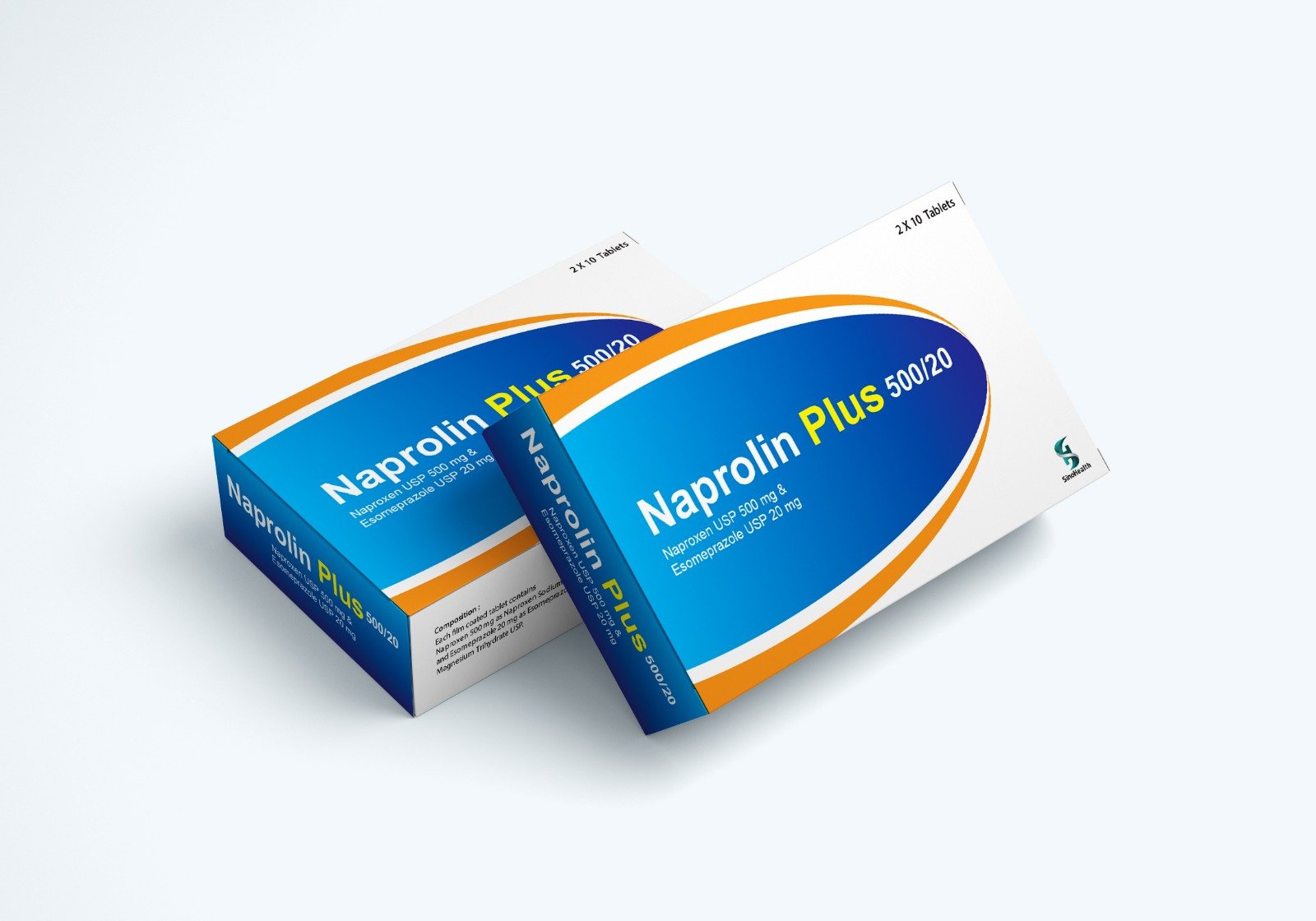
Naprolinplus
Description
💊 Naprolinplus – Naproxen + Esomeprazole
Manufacturer: SinoHealth Pharmaceuticals LTD
1. Indications:
Naprolinplus is indicated for the relief of signs and symptoms of:
-
Osteoarthritis (OA)
-
Rheumatoid Arthritis (RA)
-
Ankylosing Spondylitis
-
To decrease the risk of developing gastric ulcers in patients at risk of NSAID-associated gastric ulcers
রেজিস্টার্ড চিকিৎসকের পরামর্শ মোতাবেক ঔষধ সেবন করুন।
2. Pharmacology:
-
Naproxen: NSAID with analgesic and antipyretic properties; inhibits prostaglandin synthesis to reduce pain and inflammation.
-
Esomeprazole: Proton pump inhibitor; suppresses gastric acid secretion by inhibiting H⁺/K⁺ ATPase in gastric parietal cells, reducing gastric acidity.
-
The tablet has an immediate-release Esomeprazole layer and an enteric-coated Naproxen core, releasing Esomeprazole first to protect the stomach before Naproxen absorption.
3. Dosage & Administration:
Adults (OA, RA, Ankylosing Spondylitis):
-
One tablet twice daily:
-
375 mg Naproxen / 20 mg Esomeprazole or
-
500 mg Naproxen / 20 mg Esomeprazole
-
Adolescents (12+ years, Juvenile Idiopathic Arthritis):
-
Weight >50 kg: same as adult dose
-
Weight 38–50 kg: 375 mg Naproxen / 20 mg Esomeprazole twice daily
Administration:
-
Do not split, chew, crush, or dissolve.
-
Take at least 30 minutes before meals.
Use the lowest effective dose for the shortest duration necessary.
4. Interaction:
-
ACE inhibitors, diuretics, beta-blockers: May reduce antihypertensive effect
-
Warfarin: Increased risk of bleeding
-
Drugs dependent on gastric pH (ketoconazole, iron salts, digoxin): Absorption may be affected
-
Food: High-fat meals may prolong tmax of Naproxen by 10 hours and reduce peak plasma concentration by ~12%
5. Contraindications:
-
Hypersensitivity to Naproxen, Esomeprazole, or benzimidazoles
-
History of asthma, urticaria, or NSAID/aspirin allergy
-
Peri-operative use in coronary artery bypass graft (CABG) surgery
6. Side Effects:
-
Reduced GI side effects due to Esomeprazole layer
-
Common NSAID effects: GI discomfort, peptic ulcers, nausea, vomiting, dyspepsia, abdominal pain, diarrhea, flatulence, constipation
-
Cardiovascular: oedema, hypertension, cardiac failure
-
Rare: serious arterial thrombotic events (MI, stroke), GI bleeding, ulceration, perforation
7. Pregnancy & Lactation:
-
Pregnancy: Avoid in women attempting to conceive or during first and second trimesters unless benefit outweighs risk; contraindicated in third trimester
-
Breastfeeding: Naproxen excreted in low quantities; Esomeprazole unknown; avoid use
-
Fertility: NSAIDs may impair female fertility; avoid if planning conception
8. Precautions & Warnings:
-
Avoid cumulative NSAID use including COX-2 inhibitors
-
Use with low-dose aspirin only if necessary
-
Minimize risk by using lowest effective dose for shortest duration
-
Monitor elderly and patients with GI history closely
-
Cardiovascular risk: monitor patients with hypertension, heart failure, ischemic heart disease, or cerebrovascular disease
-
Renal: Long-term NSAID use may cause renal injury
-
Hepatic: Monitor mild-to-moderate impairment; avoid severe hepatic impairment
9. Overdose Effects:
Naproxen: lethargy, dizziness, drowsiness, GI discomfort, heartburn, nausea, liver/renal dysfunction, hypotension, coma (rare)
Esomeprazole: transient effects with doses >240 mg/day; single 80 mg doses uneventful
Management:
-
Symptomatic and supportive care
-
No specific antidote
-
Activated charcoal, emesis, osmotic cathartics if ingestion <4 hours
-
Hemodialysis ineffective due to high protein binding
10. Therapeutic Class:
-
Drugs for Osteoarthritis
-
Drugs used for Rheumatoid Arthritis
-
Non-Steroidal Anti-Inflammatory Drugs (NSAIDs)
11. Storage Conditions:
-
Store below 30°C, protected from light and moisture
-
Keep out of reach of children
Related products